

Mahé Pereira

Dr. Mahé Pereira is a general practitioner turned product manager at Videolab. She draws on her clinical background to shape how video-based tools meet the real needs of medical education programs, from skills-lab training to OSCE workflows. Her move from clinical practice to product came from a desire to influence healthcare education at a systems level rather than one consultation at a time. Reach out on LinkedIn.

video recording software in healthcare

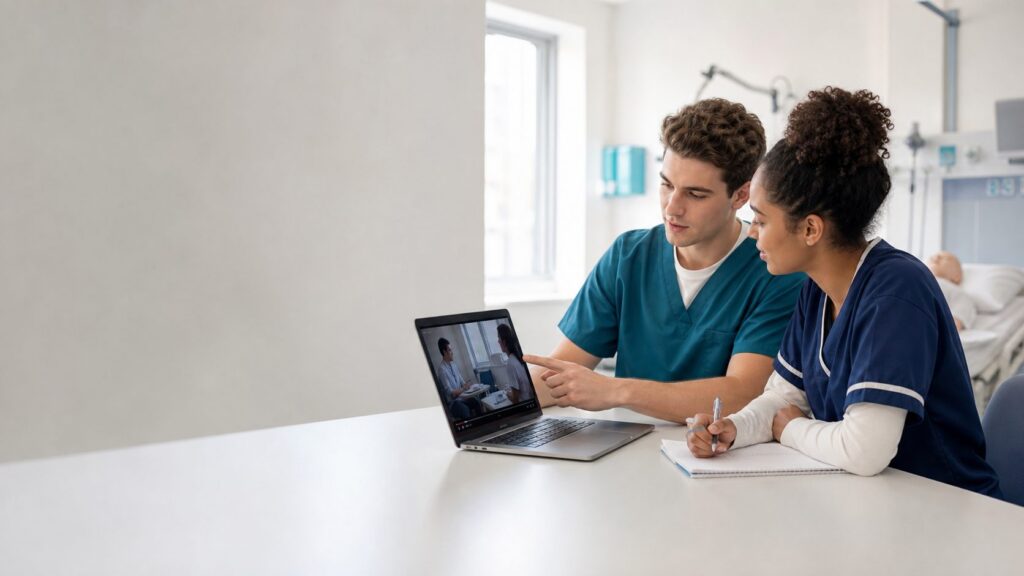
How to Choose Video Recording Software for Medical Education

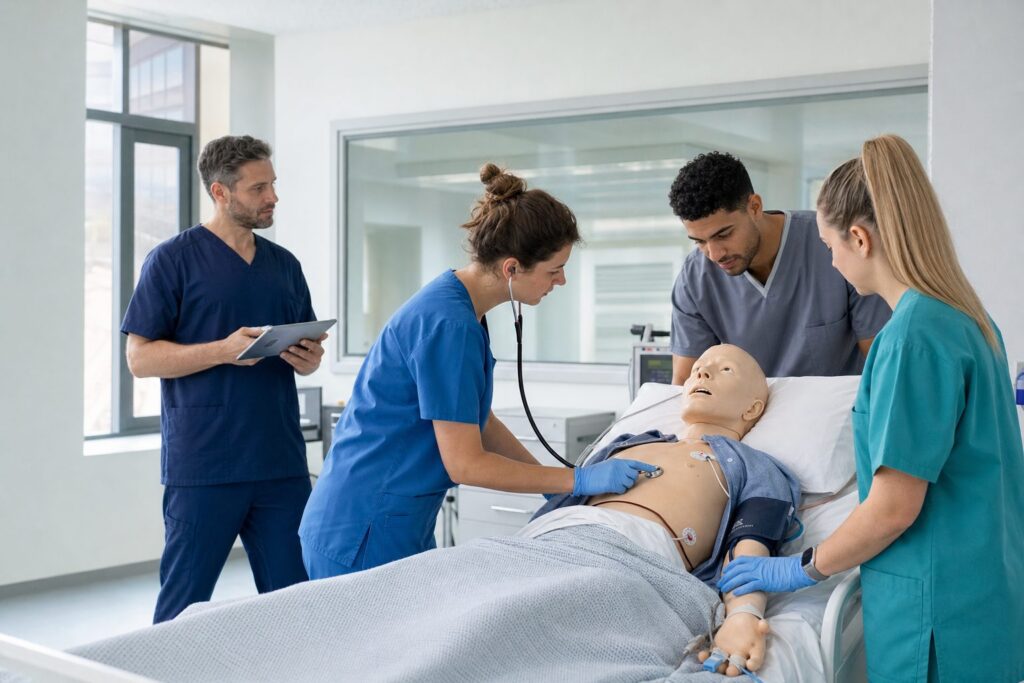
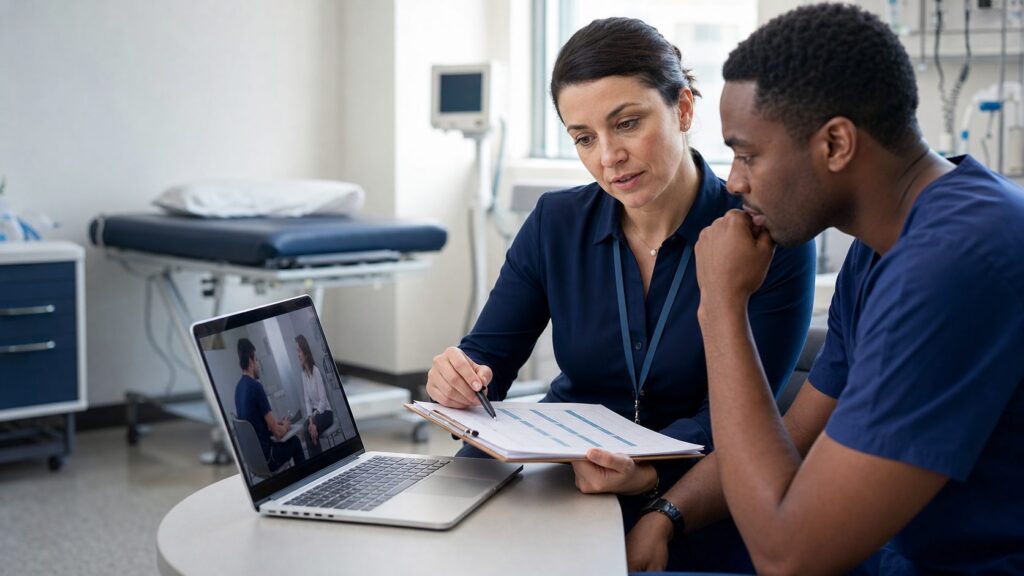
Medical faculties rarely struggle to record video. The difficult part is managing what happens afterwards. Clinical skills training often involves multiple assessors, sensitive recordings, structured feedback, and long term competency tracking. A generic recording platform may capture the interaction, but it usually does not support the educational workflow around it. This becomes particularly visible in […]

How to Choose Video Recording Software for Medical Education Read More »

empathic accuracy

Empathic Accuracy vs Empathy: Why clinicians misread patients

What is empathic accuracy Empathic accuracy is the ability to correctly infer another person’s thoughts and feelings in a specific moment. It differs from general empathy by focusing on how precise that understanding is, rather than how much emotional connection or concern a person shows. In clinical communication, this distinction is critical. Clinicians often rely

Empathic Accuracy vs Empathy: Why clinicians misread patients Read More »

remote osce

Remote OSCE: how to design valid clinical assessments at a distance

What is a remote OSCE and how does it differ from traditional OSCEs Objective Structured Clinical Examinations, known as OSCEs, assess clinical competence by observing how candidates perform across multiple structured stations. Many institutions now adopt remote OSCEs to respond to changing educational needs. Each station targets a specific task such as history taking, communication,

Remote OSCE: how to design valid clinical assessments at a distance Read More »

micro expressions healthcare communication analysis

Micro Expression

Human communication involves much more than spoken words. Facial expressions, tone of voice, and body language all shape how people interpret what someone is feeling. Among these signals, one of the most subtle and debated forms of nonverbal communication is the micro expression. Micro expressions are extremely brief facial expressions that appear when a person

Micro Expression Read More »

How to Identify Emotions

Identifying emotions is a key skill in human communication. Emotions influence how people interpret information, respond to others, and make decisions during conversations. However, emotions are not always expressed directly. Instead, they often appear through subtle behavioural signals such as facial expressions, tone of voice, and body language. Learning how to identify emotions helps individuals

How to Identify Emotions Read More »

Measuring Communication Skills in Healthcare

Communication Skills in Healthcare: From Soft Skill to Measurable Clinical Competency Clinical communication skills shape diagnosis, decision-making, and patient safety. Yet many healthcare programmes still treat communication as a soft skill rather than a measurable clinical competency. When educators fail to define clinical communication skills in behavioural terms, learners struggle to improve them. If communication

Measuring Communication Skills in Healthcare Read More »

Emotional Cues in Healthcare

Emotional Cues in Healthcare: How to Recognize, Interpret, and Assess Them in Clinical Training Emotional cues in healthcare are verbal or nonverbal signals that reveal a patient’s emotional state, concerns, or life context. These cues may appear as direct statements, subtle hints, tone shifts, or body language. In clinical training, recognizing emotional cues transforms communication from intuition

Emotional Cues in Healthcare Read More »

video tools for healthcare

Generic vs Specialized Video Tools for Healthcare Settings

Across healthcare education and clinical training, video recording increasingly functions as institutional infrastructure rather than a supplementary teaching tool. Universities and teaching hospitals rely on video to support communication skills training, simulation, assessment, supervision, and research. Once video is used in these contexts, especially when it supports assessment, appeals, or real patient encounters, procurement classification

Generic vs Specialized Video Tools for Healthcare Settings Read More »

synchronous vs asynchronous learning

The Difference Between Synchronous and Asynchronous Learning in Healthcare

The real issue isn’t synchronous vs asynchronous learning Most debates about synchronous versus asynchronous learning in healthcare start in the wrong place. The problem usually isn’t that educators chose the wrong format. It’s that formats get treated as strategies, rather than tools that serve different learning purposes. In healthcare and teacher education alike, learning often

The Difference Between Synchronous and Asynchronous Learning in Healthcare Read More »

Scroll to Top