
Mahé Pereira

Dr. Mahé Pereira is a general practitioner turned product manager at Videolab. She draws on her clinical background to shape how video-based tools meet the real needs of medical education programs, from skills-lab training to OSCE workflows. Her move from clinical practice to product came from a desire to influence healthcare education at a systems level rather than one consultation at a time. Reach out on LinkedIn.

effective communication in healthcare

Strategies for Effective Communication in Healthcare

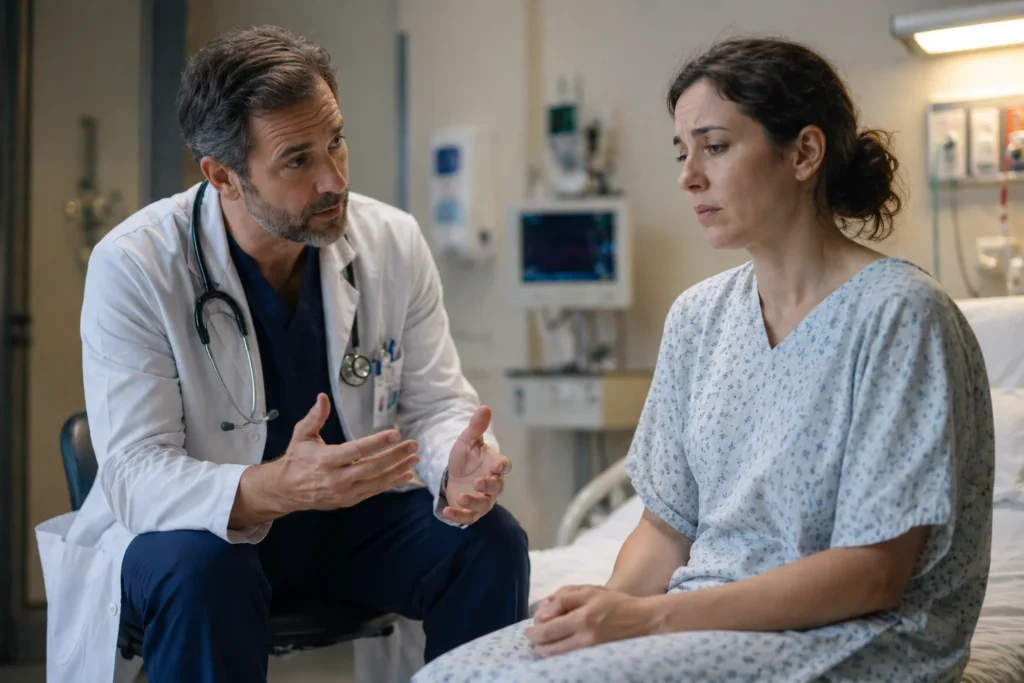
Why effective communication in healthcare is taught Effective communication in healthcare is already well established as a core competency. It appears in accreditation standards, competency frameworks, and learning outcomes across medical, nursing, and allied health education. Learners are taught to listen actively, show empathy, and involve patients in decisions. Yet despite this formal emphasis, communication […]

Strategies for Effective Communication in Healthcare Read More »

video use during osce

Competency Based Medical Education: What It Means for Medical Training

What is competency based medical education? Competency based medical education (CBME) is an approach to training physicians that focuses on the abilities learners must demonstrate in real clinical practice. Instead of measuring progress primarily by the amount of time spent in rotations or courses, CBME evaluates whether trainees can perform key professional tasks safely and

Competency Based Medical Education: What It Means for Medical Training Read More »

video-based OSCE review scoring

Getting Started with Video-Based OSCEs

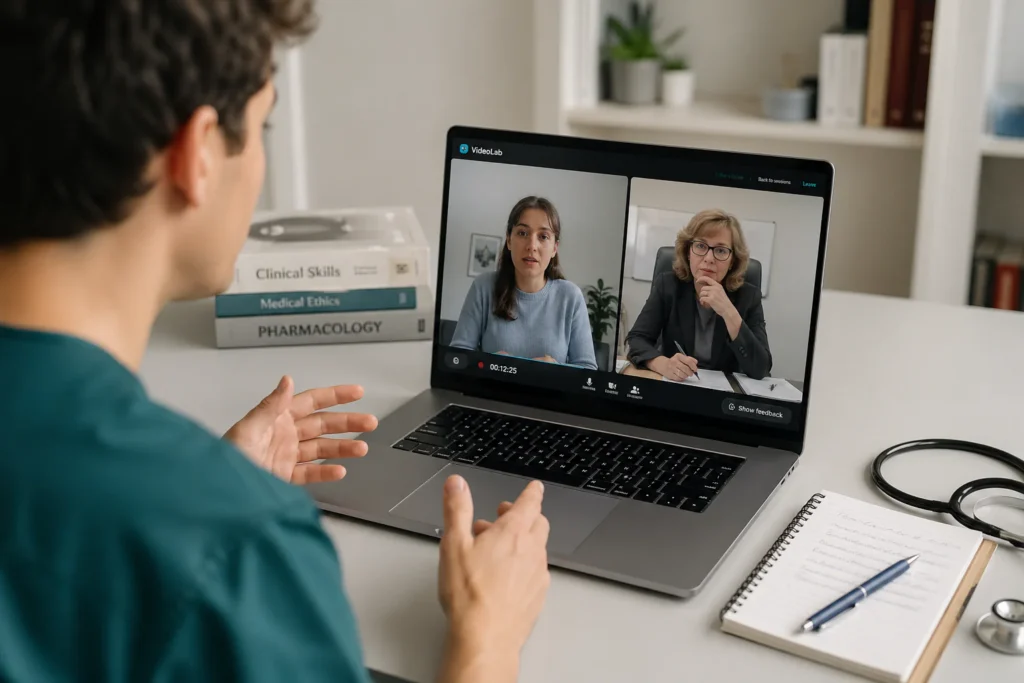
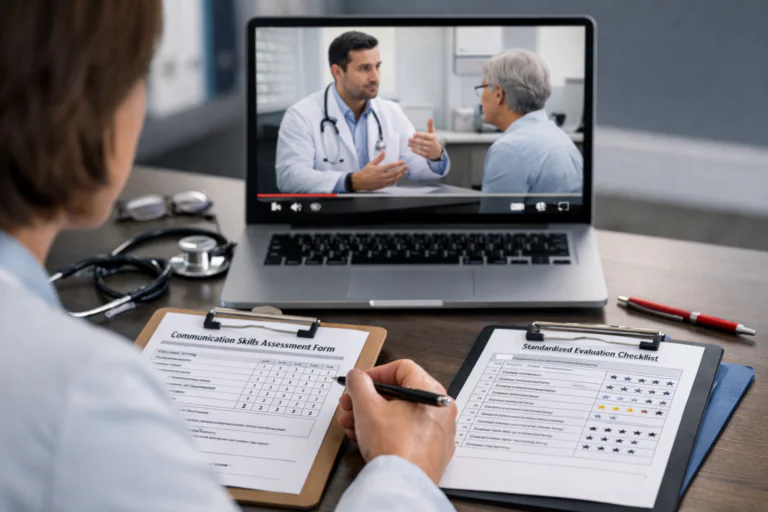
Objective Structured Clinical Examinations (OSCEs) are widely used in health professions education as the gold standard for evaluating clinical and communication skills. They combine structured scenarios, standardized patients, and observation checklists to test clinical reasoning, communication, and technical skills under controlled conditions. OSCEs are not only about assessing knowledge and skills; they also lay the

Getting Started with Video-Based OSCEs Read More »

mirroring body language in clinical settings

Mirroring Body Language: Insights for Clinical Training

Mirroring body language is a communication behavior where one person subtly copies another’s nonverbal cues during an interaction. When used effectively, it can help medical students and clinicians build rapport faster and help patients feel heard and understood, which is key for patient-centered care and shared decision-making. This technique is already part of soft skills

Mirroring Body Language: Insights for Clinical Training Read More »

self awareness vs self reflection

Self Awareness vs Self Reflection: Key Differences

Their Role in Healthcare Training Self-awareness and self-reflection are often used interchangeably in clinical education, but they describe two distinct cognitive processes that serve different functions in professional development. Understanding the difference is not merely a semantic exercise. Conflating them tends to produce feedback frameworks that are vague about what they are actually asking learners

Self Awareness vs Self Reflection: Key Differences Read More »

calming and reassuring an anxious patient

How to Calm and Reassure an Anxious Patient: 7 Effective, Evidence-Based Techniques

Patient anxiety is a common challenge in healthcare settings. Whether someone is awaiting test results, facing a medical procedure, or navigating a new diagnosis, anxiety can cloud communication, delay care, and reduce overall satisfaction. In high-stress moments (like emergency room visits, invasive treatments, or critical care discussions) even routine interactions can feel overwhelming for patients.

How to Calm and Reassure an Anxious Patient: 7 Effective, Evidence-Based Techniques Read More »

interprofessional collaboration

Interprofessional Collaboration in Healthcare: Examples

 Interprofessional frameworks often emphasize individual competencies and adopt a broad scope to remain versatile across diverse settings. Yet, this generalized approach can be inadequate for navigating the complexities unique to hospital settings. A systematic review of 22 studies suggests that interprofessional collaboration (IPC) “may affect Patient-Reported Outcomes positively across all outcomes” such as quality of

Interprofessional Collaboration in Healthcare: Examples Read More »

How to deliver Patient Centered Healthcare

What is Patient-Centered Care (PCC)? The most crucial skill for a health practitioner is reportedly good communication. Effective communication depends on the therapist being confident that they have accurately understood and noted the needs of the patient in order to deliver individualized care. In order to identify patients’ true needs and respond appropriately by providing

How to deliver Patient Centered Healthcare Read More »

Scroll to Top