Blog

Continuous Professional Development in Medicine – Made Easy

This Blog is a practical Guide for CPD (Continuous Professional Development in the field of medicine), based on the WFME-Standards-for-Continuing-Professional-Development, which is very helpful if you want to become an expert on the topic, but also quite dense to read through.  If you’re a doctor, chances are you’ve heard the phrase continuous professional development more times than you […]

Continuous Professional Development in Medicine – Made Easy Read More »

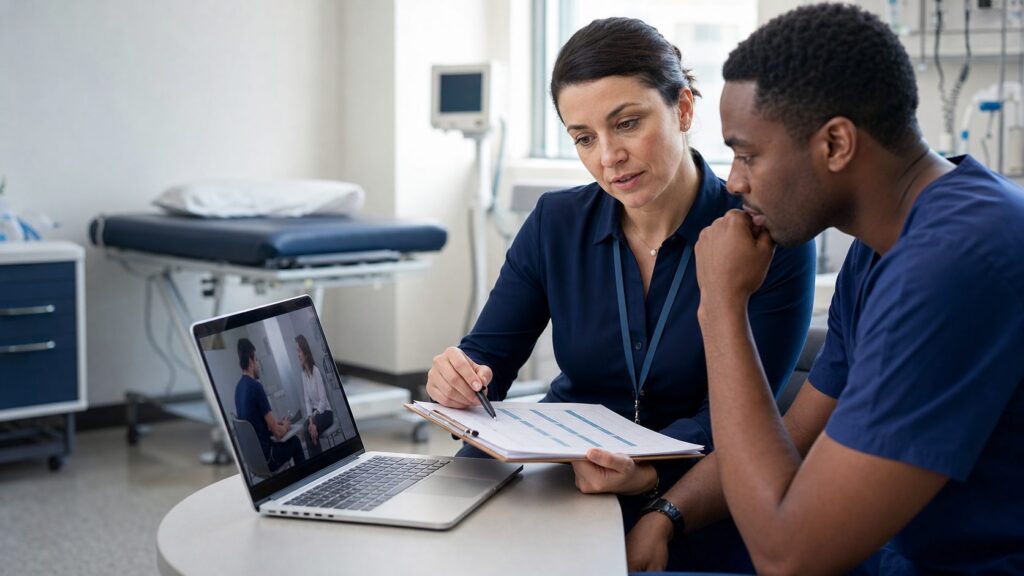
video tools for healthcare

Generic vs Specialized Video Tools for Healthcare Settings

Across healthcare education and clinical training, video recording increasingly functions as institutional infrastructure rather than a supplementary teaching tool. Universities and teaching hospitals rely on video to support communication skills training, simulation, assessment, supervision, and research. Once video is used in these contexts, especially when it supports assessment, appeals, or real patient encounters, procurement classification

Generic vs Specialized Video Tools for Healthcare Settings Read More »

synchronous vs asynchronous learning

The Difference Between Synchronous and Asynchronous Learning in Healthcare

The real issue isn’t synchronous vs asynchronous learning Most debates about synchronous versus asynchronous learning in healthcare start in the wrong place. The problem usually isn’t that educators chose the wrong format. It’s that formats get treated as strategies, rather than tools that serve different learning purposes. In healthcare and teacher education alike, learning often

The Difference Between Synchronous and Asynchronous Learning in Healthcare Read More »

effective communication in healthcare

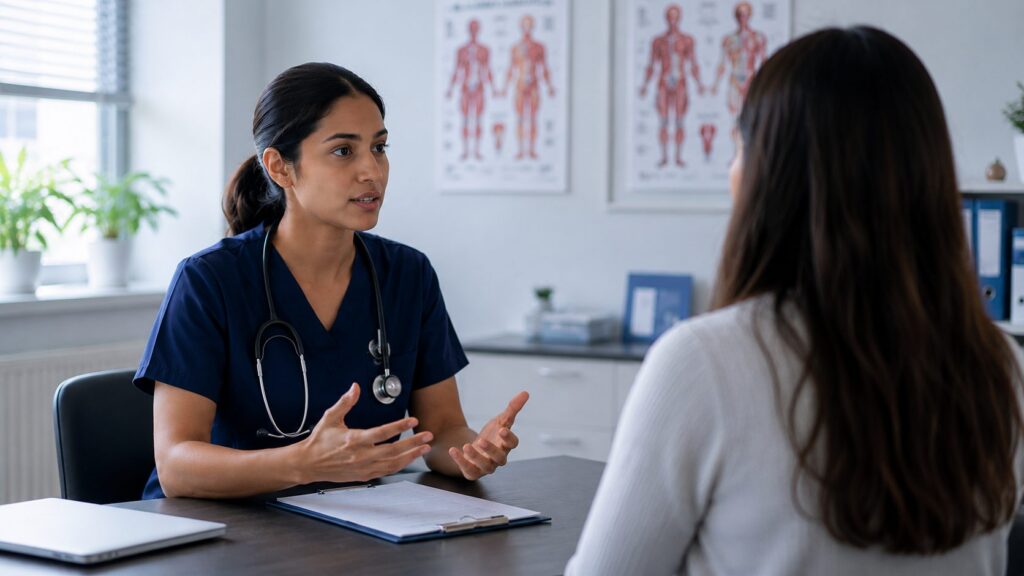
Strategies for Effective Communication in Healthcare

Why effective communication in healthcare is taught Effective communication in healthcare is already well established as a core competency. It appears in accreditation standards, competency frameworks, and learning outcomes across medical, nursing, and allied health education. Learners are taught to listen actively, show empathy, and involve patients in decisions. Yet despite this formal emphasis, communication

Strategies for Effective Communication in Healthcare Read More »

Medical simmulation

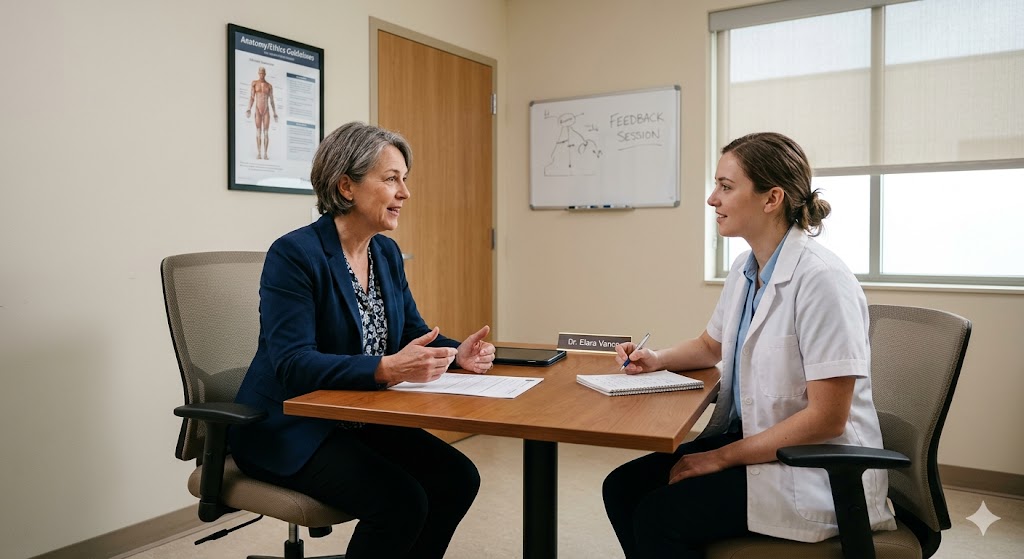
Effective Debriefing for Simulation-Based Medical Education

Introduction A quintessential part of medical education is simulation-based learning, where both students and medical professionals are confronted with situations out of their comfort zone in a controlled environment. While simulation provides the experience, it is the structured reflection that transforms that experience into knowledge. Often seen as a post-scenario chat or confused with Feedback,

Effective Debriefing for Simulation-Based Medical Education Read More »

video use during osce

Competency Based Medical Education: What It Means for Medical Training

What is competency based medical education? Competency based medical education (CBME) is an approach to training physicians that focuses on the abilities learners must demonstrate in real clinical practice. Instead of measuring progress primarily by the amount of time spent in rotations or courses, CBME evaluates whether trainees can perform key professional tasks safely and

Competency Based Medical Education: What It Means for Medical Training Read More »

video-based OSCE review scoring

Getting Started with Video-Based OSCEs

Objective Structured Clinical Examinations (OSCEs) are widely used in health professions education as the gold standard for evaluating clinical and communication skills. They combine structured scenarios, standardized patients, and observation checklists to test clinical reasoning, communication, and technical skills under controlled conditions. OSCEs are not only about assessing knowledge and skills; they also lay the

Getting Started with Video-Based OSCEs Read More »

mirroring body language in clinical settings

Mirroring Body Language: Insights for Clinical Training

Mirroring body language is a communication behavior where one person subtly copies another’s nonverbal cues during an interaction. When used effectively, it can help medical students and clinicians build rapport faster and help patients feel heard and understood, which is key for patient-centered care and shared decision-making. This technique is already part of soft skills

Mirroring Body Language: Insights for Clinical Training Read More »

Scroll to Top