
The Role of Video in Healthcare Education
Video has become a standard part of how healthcare professionals train, not a novelty. Medical schools and hospitals use it to sharpen clinical education, build communication skills, and improve decision-making under pressure.
Video gives students a formal way to review, analyse, and learn from their own interactions and from watching others. It’s a different kind of self-reflection: seeing how you actually come across, not just how you think you did. That’s especially valuable in fields like anesthesiology, where clear communication under pressure is part of the job.
One clear example of this in practice comes from the Department of Anesthesiology at Hamburg-Eppendorf University Medical Center (UKE), where we interviewed two of the specialists leading the program, Parisa Moll-Khosrawi and Leonie Kröger, about why they adopted video-based learning, how it has been implemented, and the impact it has had on students, faculty, and training. (For the full case study on UKE’s rollout, see our Hamburg-Eppendorf success story.)
[lyte id=’RlZZsWLuAYA’ /]
The Need for Videolab: Challenges and Decision-Making
Effective healthcare education requires a combination of hands-on practice, structured feedback, and opportunities for reflection. At Hamburg-Eppendorf University Medical Center, video-based learning has long been a valuable tool in medical training. Traditional video recording and debriefing sessions have helped students analyze their clinical interactions and improve their communication skills.
Why Video-Based Learning?
Video-based learning offers several advantages in medical education:
- It allows students to observe and analyze their own interactions, which can improve self-awareness and communication skills.
- It provides opportunities for structured feedback, where instructors and peers can highlight specific moments for discussion.
- It enhances learning in complex training scenarios, such as emergency medicine or patient communication, where real-time observation may not capture every detail.
Recognizing these benefits, the department implemented Videolab to refine how students receive and process feedback. Unlike traditional video recording, this approach allows for detailed, time-stamped annotations, which help students identify specific areas for improvement.
Current Applications: Where Videolab is Used
Videolab is currently being used in two key areas within the Department of Anesthesiology:
- Chronic Pain Management – Helping students learn how to communicate effectively with patients experiencing severe pain while demonstrating empathy and active listening.
- Emergency Situations – Supporting students in developing team-based communication skills, which are essential for making quick, coordinated decisions in high-pressure scenarios.
Both use cases aim at the same goal: reviewing recorded sessions with structured feedback to support ongoing skill development and prepare students for real clinical interactions.
Key Purposes: Using Video for Student Feedback and Growth
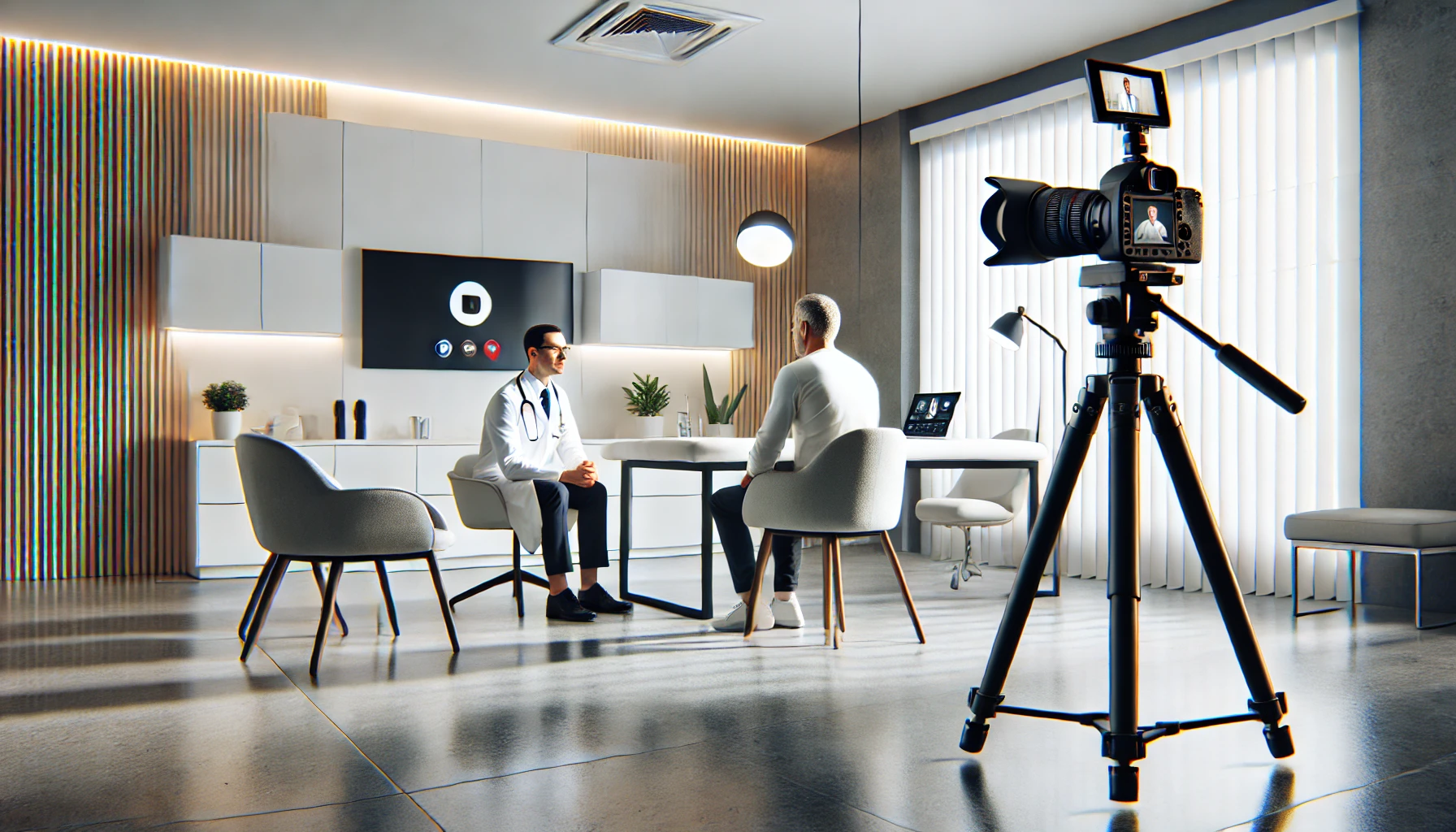
At the Department of Anesthesiology at Hamburg-Eppendorf University Medical Center, video technology is primarily used to record simulated medical consultations. Since many of these training scenarios involve emergency medicine, video plays a crucial role in capturing real-time interactions for later review.
To facilitate this process, the team uses the Videolab Recorder App on iPads and tripods to set up cameras in training environments. These recordings allow both students and faculty to assess a range of clinical and communication skills. As mentioned above, the two main use cases are Emergency Scenarios and Chronic pain management sessions, students are encouraged to develop effective communication skills. Videolab also facilitates peer and mentor feedback, creating a collaborative learning environment.
The most valuable feature of Videolab for them has been the ability to provide fragmented feedback. This feature allows assessors to leave specific comments on precise moments during the interaction, targeting areas that need improvement. Unlike traditional video-based feedback in healthcare, which tends to be more general, Videolab’s timeline-driven comments enable highly personalised, detailed feedback, making it far more effective for skill development.
Additionally, educators can track student progress over time, ensure that learning objectives are met, and provide personalised guidance to help students refine their competencies.
Student Reactions and Feedback Effectiveness of Video in Healthcare
Integrating video-based feedback into medical training is a significant shift for many students, and initial reactions have been mixed. Some students initially find watching themselves on video uncomfortable, as it requires them to confront their own communication habits and clinical decision-making. However, as they engage more with the process, they recognize its value in improving their skills.
One key advantage is that students can revisit their recorded sessions at home, allowing them to reflect on their interactions at their own pace.
This additional time for review helps them process feedback more thoroughly, leading to deeper learning and self-awareness.
The feedback process typically unfolds in two stages:
- Group Review & Discussion – Students first watch their recordings together, guided by faculty and peers who provide structured feedback.
- Independent Reflection – They then have the opportunity to revisit their session later, reinforcing learning and allowing for more personal insights.
Expected Outcomes
The ultimate goal is to improve how well students communicate in clinical settings. It’s still early days, but Parisa is optimistic that Videolab will support long-term development, strengthening situational awareness in brief clinical interactions while encouraging self-reflection and better communication skills. As the program continues, faculty will assess how ongoing exposure to video feedback shapes students’ confidence and competence in real-world healthcare settings.

Looking Ahead: The Future of Video in Healthcare Education
Both Parisa Moll-Khosrawi and Leonie Kröger expect video technology to play a bigger role in healthcare training going forward, as part of a broader shift toward video-based learning across medical education.
“Videolab will have a great impact on healthcare.” – Parisa Moll-Khosrawi
One of the most promising aspects is what it does for supervision. Faculty no longer need to observe every interaction in real time. They can review recorded sessions asynchronously instead, which takes pressure off supervisors and lets multiple assessors weigh in on the same performance for a more well-rounded evaluation.
Video technology could also play a role in redesigning postgraduate education specifically, where the same recording and review cycle applies just as well to more experienced clinicians refining their communication under pressure. As more institutions explore this, video looks set to become a standard part of medical training rather than an add-on.