

Introduction
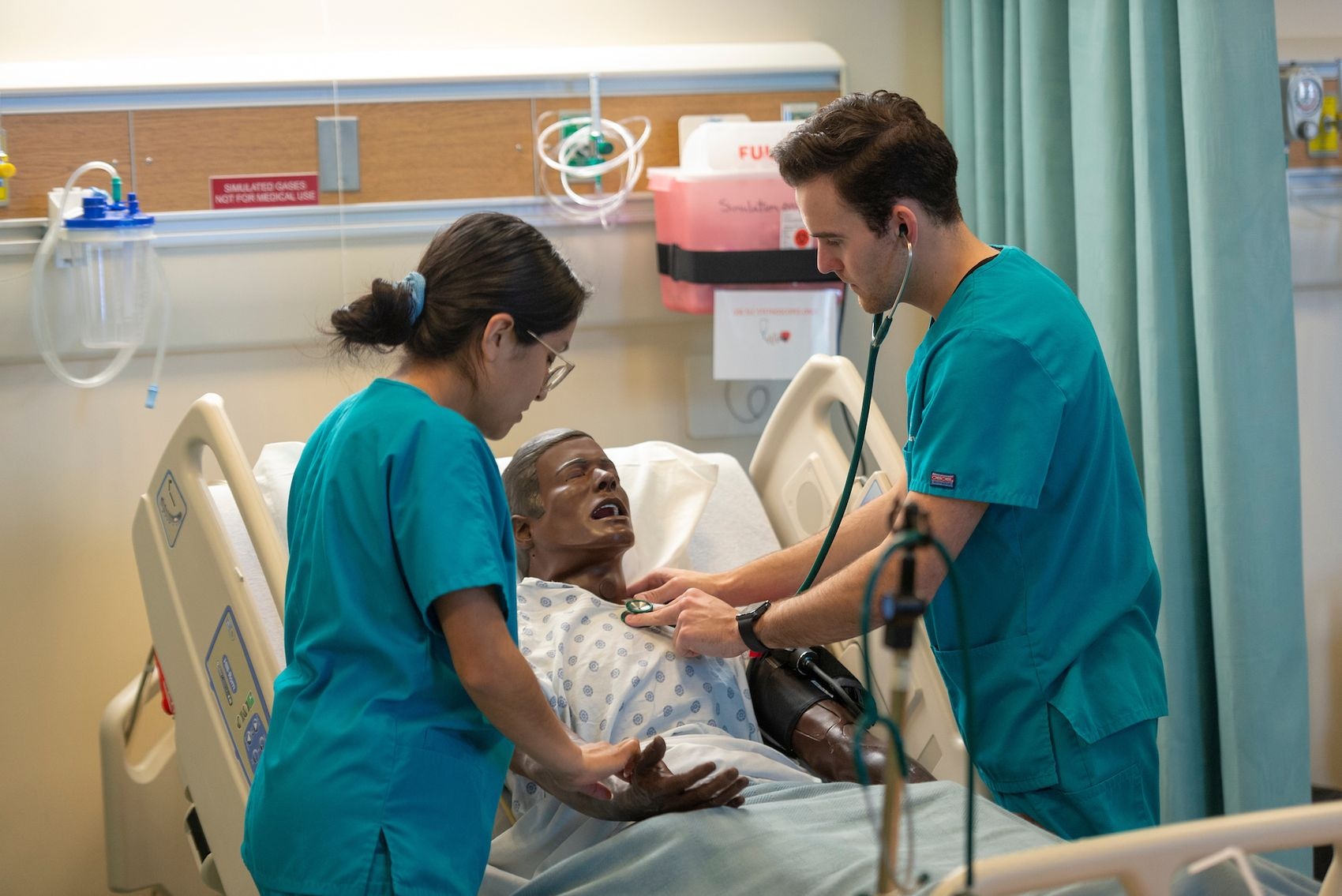
A quintessential part of medical education is simulation-based learning, where both students and medical professionals are confronted with situations out of their comfort zone in a controlled environment. While simulation provides the experience, it is the structured reflection that transforms that experience into knowledge. Often seen as a post-scenario chat or confused with Feedback, which is only one-directional. If done correctly, debriefing turns into a guided, reflective conversation that allows learners to process what happened, why it happened, and how they can improve next time. Furthermore, it helps educators gain insights into learners’ thinking processes, revealing gaps and strengths that traditional assessments might miss. This blog helps you to understand the science behind debriefing and provides concrete strategies based on relevant academic articles.

Timing and Types of Debriefing
Debriefing can happen in two key moments. After the simulation or right in the middle of it. Post-event and within-event debriefing each offer unique ways to improve learning. These approaches are known as post-event and within-event debriefing. Post-event debriefing may be facilitated by an instructor or self-guided by learners, whereas within-event debriefing always involves a facilitator who helps participants reflect while the scenario unfolds. From these findings, three main methods emerge
- facilitator-guided post-event debriefing
- self-guided post-event debriefing
- facilitator-guided within-event debriefing.
Facilitator-guided post-event debriefing is by far the most common. It follows a clear structure, which starts with reactions, digs into what happened, and finishes with key lessons for real-world practice. Some frameworks use three stages, others six or seven, but the goal is always the same. Bring trainees from just experiencing the task to meaningful long lasting insights.

The Essential Elements of Effective Debriefing
Great debriefing doesn’t happen by accident. It’s built on a few essential elements that turn a simple conversation into a powerful learning experience. Drawing on the article “More Than One Way to Debrief”, which is very recommendable to read for a detailed analysis of Debriefing in medical simulation, there are the core components every facilitator should master:
Psychological Safety: Learners need to feel safe to speak openly, take risks, and admit uncertainty without fear of judgment.
Debriefing Stance: Begin with curiosity and adopt the “basic assumption” that every participant is intelligent, capable, and eager to improve.
Clear Rules: Set ground rules from the start. Confidentiality and active participation are non-negotiable.
Shared Mental Model: Ensure everyone agrees on what happened during the simulation before diving into analysis.
Learning Objectives: Keep the conversation focused on the goals of the exercise to make learning purposeful and directed.
Open-Ended Questions: Ask “what” and “why” instead of “did you.” Encourage dialogue, reflection, and self-assessment.
Silence: Embrace pauses. Silence gives learners time to think, process, and internalize insights.
Debriefing Models and Techniques
a) Three-Phase Models
There are multiple different Defbriefing Three-Phase-Models used in medical simulation. But the most prominent one was designed by Rudolph et al. The model introduced a clear, three-phase structure for debriefing designed to guide reflection and learning after a simulation.
The first phase, reaction, focuses on how participants felt during the experience. It gives them space to express emotions, release tension, and share their initial impressions. This phase is important, because it helps create psychological safety and prepares participants to think more clearly about what happened. The second phase, analysis, digs deeper into performance. Here, the group explores what happened and why, going through all the decisions and actions taken in the simulation separately. The goal is to connect behavior to outcomes. These connections lead to insights that produce concrete improvements. Lastly the summary Phase highlights key lessons, reinforces learning objectives, and turns reflection into actionable takeaways that participants can apply in real-world situations.
There are a couple of Three-Phase models that work in similar ways. Therefore, it is recommended, depending on the use case, also to read the following academic articles to gain a deeper understanding of the topic
- 3D model (defusing, discovery, and deepening)
- GAS Model (gather, analyze, and summarize)
- Diamond debriefing method (which includes: description, analysis, and application)
3-Phase Conversation Structures |
|||
|---|---|---|---|
|
Debriefing with good Judgment |
3D Model |
GAS |
Diamond debriefing |
|
Reaction |
Defusing |
Gather |
Description |
|
Analysis |
Discovering |
Analyse |
Analysis |
| Summary | Deepening | Summarize |
Application |
b) Multiphase Models)
Among the three different multiphase debriefing models in medical simulation, this blog will go into detail about TeamGAINS. TEAMgains is an acronym representing the hybrid combination of Guided Team Self-correction, Advocacy-Inquiry, and Systemic-constructivist techniques. In other words, it’s about actively engaging learners in the analysis of team performance. The model includes six different stages:
| 1. Reaction |
| 2. Discuss the clinical component |
| 3. Transfer from Simulation to reality |
| 4. Discuss behavioral skills |
| 5. Summary |
| 6. Supervised practice of clinical skills (if needed) |
The Three Pillars of TEAMgains
While the model consists of 6 different stages, it can be broken down into three main Pillars.
- Guided Team Self-Correction (G): The team starts the process by self-critique. In this step, the participants describe positive and negative behaviors against a clear teamwork model. The instructor maintains a non-judgmental position. This is allowing the team to have a critical self-analysis based on predefined skills.
- Advocacy-Inquiry (AI): This technique allows the expert to directly voice specific performance gaps (Advocacy). Crucially, this is immediately followed by a powerful, reflective question, such as, “What was on your mind?” (Inquiry). This transparency forces both the expert and the trainee to reveal their thought processes, uncovering assumptions and underlying mental models.
- Systemic-Constructivist Techniques (S): These methods deliberately shift the focus away from individual blame and toward the dynamic patterns of team interaction. Therefore, systematic tools like circular questions are used to help the team understand the context that drove the behavior. To give you an example, asking a team member, “What would your colleague have needed from you in that situation?” encourages perspective-taking and focuses on mutual influence.
Other multiphase models, such as the After Action Review (AAR) and PEARLS (Promoting Excellence and Reflective Learning in Simulation), also offer valuable structures for reflection. The AAR model, often used in military and emergency settings, emphasizes open discussion of what was expected to happen, what actually happened, and what can be improved next time. PEARLS, on the other hand, provides a flexible framework that blends different debriefing strategies to fit the needs of the learners and the situation. Each model has its strengths. The key is to choose the approach that best supports your team, your objectives, and the context of your simulation.
Multiphase Conversation Structure |
||
|---|---|---|
| Pearls | TeamGains | Healthcare Simulation ARR |
| Reaction | Reaction | Define rules |
| Analysis | Discuss clinical component | Explain learning objectives |
| Summary | Transfer from Simulation to reality | Benchmark performance |
| Discuss behavioral skills | Review expected actions | |
| Summary | Identify what happened | |
| Supervised practice of clinical skills (if needed) | Examine why thighs happened the way they did | |
| Formalize learning | ||
The Role of Video in Debriefing
The usage of videorecording within simulation centers has become standard practice in many countries around the world. While the effectiveness is still a subject of discussion within the medical community. These are the three main benefits of using Video-assisted debriefing (VAD):
Objective Record and Reduced Bias
This topic is relatable for every medical student, since feedback is always subject to biases, even if the expert has the best intentions. Instructors are also just humans. Therefore, video recordings of the simulation provide an objective view, showing events and behaviors exactly as they happened. Thus, it helps prevent arguments and ensures feedback is not only fair but also specific and constructive.
Enhanced Perspective and Self-Reflection
Another advantage of VAD is that it allows students to observe their own performance and team dynamics from an outside perspective. This external view helps them to identify their mistakes or successful actions they missed. This often leads to reduced defensiveness and increased motivation for change, as analyzing an action on-screen feels less personal.
Improved Performance
While the degree of performance improvement is still under discussion. Some studies suggest VAD leads to improved performance in subsequent tasks for both teams and individuals. For instance, one study found VAD more effective than verbal-only debriefing (VD) in improving the quality of CPR delivery.
New ways of Debriefing through Technology
Through advancements in technology there are evolving new ways of debriefing in medical simulation. For example, Videolab is a software that turns smartphones into a mobile debriefing station. This enables facilitator-guided post-event debriefing without the expert being present. Since the video recording can be reviewed asynchronously, and the system allows for two-way communication between trainee and expert.
With systems like Videolab, instructors can give precise, time-stamped feedback, and learners can revisit their own performance whenever needed. This makes reflection more personalized and continuous, rather than limited to a single discussion. It also allows larger institutions or distributed training programs to provide consistent, high-quality debriefing experiences across locations.
Beyond tools like Videolab, new technologies in the field of AI-assisted feedback, automated performance tracking, and interactive replay features that allow learners to tag key moments during the simulation are all areas that could potentially change both the accessibility and ways in which debriefing is conducted in medical education in the future.